If you have been diagnosed with PCOS and are trying to conceive, you have probably already spoken to a gynaecologist or a fertility specialist. But there is one doctor many women with PCOS overlook completely — and that is the endocrinologist.
This is not a small oversight. PCOS is, at its core, a hormonal and metabolic condition. And the specialist trained to understand hormones at the deepest level is an endocrinologist. Understanding what they do — and why their involvement can make a real difference to your fertility journey — could change the outcome of your treatment entirely.
Polycystic Ovary Syndrome is one of the most common hormonal disorders in women of reproductive age, affecting approximately 1 in 10 women worldwide. Despite the name, the most defining features of PCOS are not actually the cysts on the ovaries — they are the hormonal imbalances that drive everything else.
Women with PCOS typically have elevated levels of androgens (male hormones), irregular or absent ovulation, and in many cases, insulin resistance. These three things — high androgens, irregular ovulation, and insulin dysfunction — create a hormonal environment that makes conception significantly harder than it should be.
This is exactly where an endocrinologist steps in.
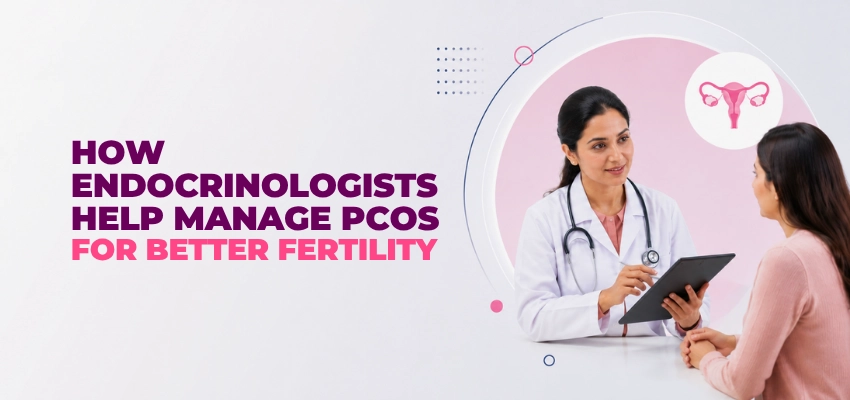
An endocrinologist is a specialist in the body's hormonal systems — including insulin, thyroid hormones, adrenal hormones, and reproductive hormones. When it comes to PCOS, their role goes far beyond what a standard gynaecology appointment covers.
Not all PCOS is the same. Some women have primarily androgen-driven PCOS. Others have insulin-resistant PCOS. Some have both. Some have PCOS that overlaps with thyroid dysfunction or adrenal issues. An endocrinologist runs a detailed hormonal panel — including fasting insulin, HOMA-IR, LH, FSH, free testosterone, DHEAS, prolactin, and thyroid function — to identify exactly what is driving your specific pattern of PCOS. This matters because treatment that works for one type of PCOS may do nothing for another. A personalised hormonal diagnosis is the foundation of effective management.
Research consistently shows that insulin resistance is present in 50 to 70 percent of women with PCOS — regardless of body weight. Elevated insulin levels signal the ovaries to produce more androgens, which suppresses ovulation and creates the hormonal chaos that defines PCOS.
Endocrinologists address insulin resistance directly — often through a combination of targeted dietary guidance, exercise recommendations, and medications like Metformin or inositol supplementation. When insulin resistance is brought under control, androgen levels often fall naturally, menstrual cycles begin to regulate, and ovulation becomes more predictable. For many women, this alone is enough to significantly improve their chances of conceiving naturally.
Elevated androgens — which cause symptoms like acne, hair thinning, and excess facial hair — also interfere directly with follicle development and egg maturation. An endocrinologist manages androgen levels through a combination of medication, lifestyle intervention, and sometimes specific supplementation, creating a hormonal environment where follicles can develop normally and ovulation can occur.
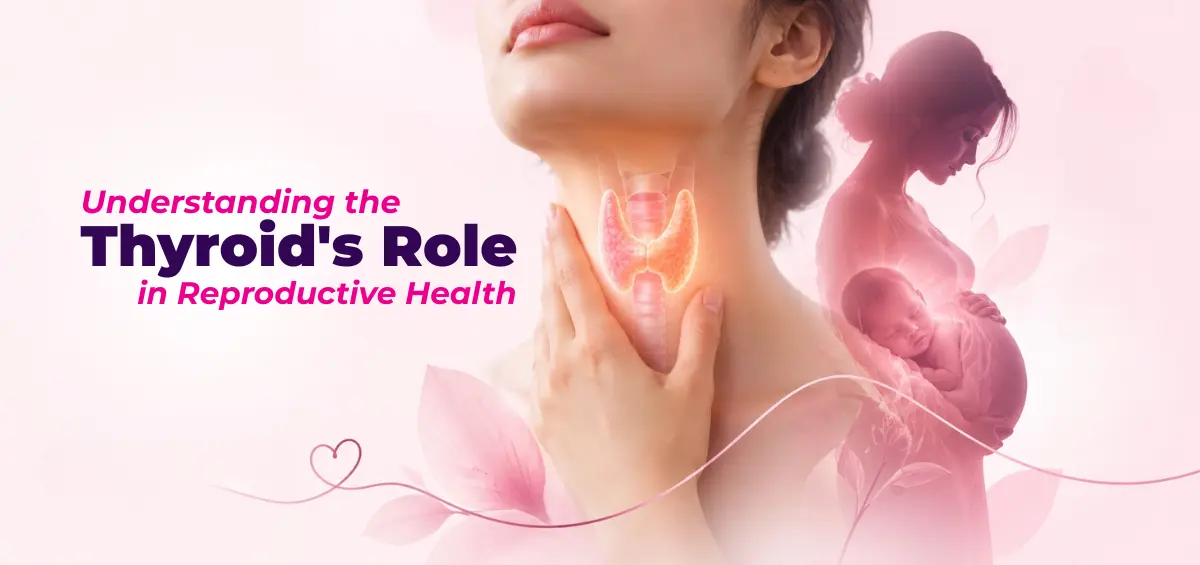
Many women with PCOS also have underlying thyroid dysfunction — either hypothyroidism or subclinical thyroid imbalance — which compounds the fertility challenge. Elevated prolactin levels, adrenal androgen excess, and cortisol dysregulation are also frequently seen alongside PCOS. These are conditions that fall squarely within endocrinology territory, and identifying and treating them can make a significant difference to both ovulation and IVF outcomes.
If natural conception is not happening and assisted reproduction is being considered, endocrinologist input becomes even more important. Women with poorly managed insulin resistance respond differently to IVF stimulation medications — and are at higher risk of ovarian hyperstimulation syndrome (OHSS). An endocrinologist works alongside the fertility team to optimise metabolic health before stimulation begins, reducing risks and improving the response to treatment.
You do not have to wait until fertility treatment has failed to seek endocrinology input. Consider asking for a referral if:
PCOS is not a fertility sentence. Millions of women with PCOS go on to have healthy pregnancies — many of them naturally, once the underlying hormonal imbalances are properly identified and addressed.
The endocrinologist is not a replacement for your fertility specialist. They are a critically important addition to your care team — the specialist who understands the hormonal language your body is speaking and knows how to bring it back into balance.
If you have PCOS and you are trying to conceive, ask about endocrinology input. It could be the piece of your treatment plan that changes everything.
Would you like to speak to a specialist about your PCOS and fertility options? Book a consultation with our team today.






0754000012