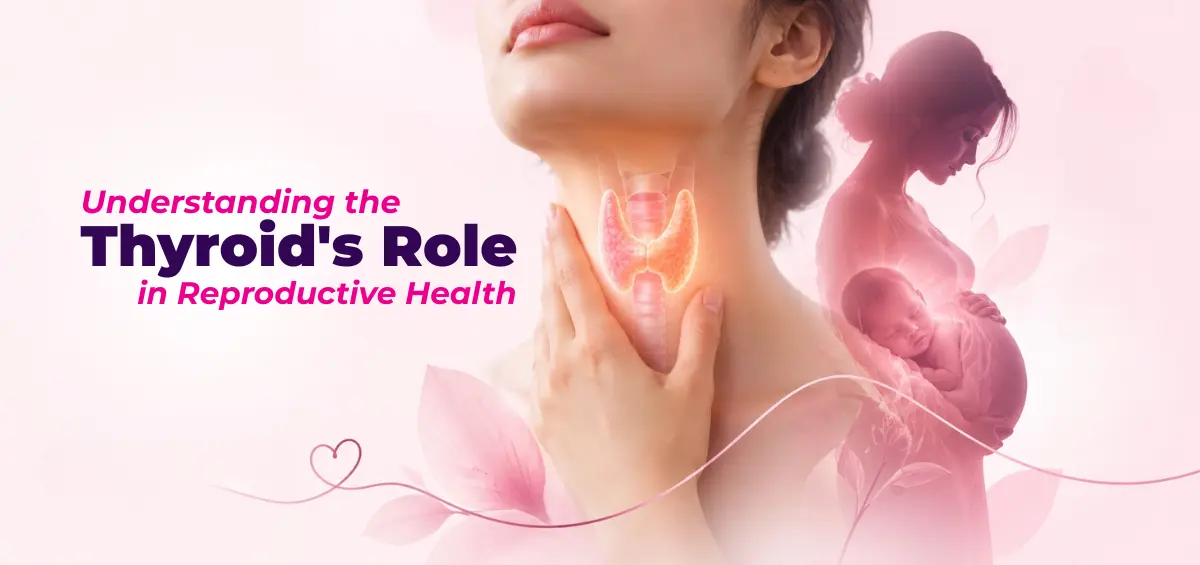
When couples think about fertility challenges, the thyroid gland is rarely the first thing that comes to mind. Yet this small, butterfly-shaped gland in your neck plays a surprisingly big role in reproductive health. An imbalance in thyroid hormones can disrupt ovulation, menstrual cycles, sperm quality, and even the ability to carry a pregnancy to term.
In this blog, we break down how thyroid disorders affect fertility, the warning signs to watch for, and what you can do about it.
The thyroid gland produces hormones (T3 and T4) that regulate metabolism, energy, and — importantly — the hormonal balance needed for a regular menstrual cycle and healthy ovulation. When thyroid hormone levels are too high or too low, it can throw off the delicate hormonal signaling between the brain and the ovaries, making conception more difficult.
Hypothyroidism (an underactive thyroid) is one of the most common thyroid conditions linked to infertility. Low thyroid hormone levels can:
Many women with mild or "subclinical" hypothyroidism don't realize they have it until they start investigating fertility issues.
Yes. An overactive thyroid (hyperthyroidism) can be just as disruptive as an underactive one. It's associated with:
Both extremes — too much or too little thyroid hormone — signal the same underlying message to the body: this may not be the right time to reproduce, hormonally speaking.
Thyroid disorders aren't just a women's health issue. In men, thyroid imbalances can lead to:
While less commonly discussed, male thyroid dysfunction is an important factor to rule out during a couple's fertility workup.
Thyroid symptoms can be subtle and are often mistaken for stress or lifestyle factors. Common signs include:
If you're experiencing several of these alongside fertility struggles, a thyroid panel is worth discussing with your doctor.
While normal ranges vary by lab, many fertility specialists prefer TSH (thyroid-stimulating hormone) levels to be closer to 1–2.5 mIU/L for women trying to conceive, rather than the broader "normal" range used for the general population. This is a conversation to have directly with your fertility specialist, as recommendations can vary based on individual history.
The encouraging news is that thyroid disorders are among the more manageable causes of infertility. Treatment typically involves:
Many women with treated thyroid conditions go on to conceive naturally once hormone levels are balanced.
This varies from person to person. Some women resume regular ovulation within a few months of starting treatment, while others may need additional time or support, especially if other fertility factors are involved. Consistent monitoring with your doctor is key to timing conception attempts effectively.
Yes — a thyroid function test (TSH, and sometimes free T3/T4 and thyroid antibodies) is a simple, low-cost blood test that's often recommended as part of a preconception check-up, especially if you have a family history of thyroid issues, irregular cycles, or have been trying to conceive for six months or more without success.
Thyroid health and fertility are more closely connected than most people realize. The good news is that thyroid disorders are highly treatable, and with the right diagnosis and care, many people go on to conceive successfully — either naturally or with fertility support.
If you've been trying to conceive and haven't had your thyroid checked yet, it may be one of the simplest and most important first steps to take.
Struggling to conceive? A simple thyroid check could be the missing piece. Talk to our fertility experts today to get a complete fertility evaluation.






0754000012