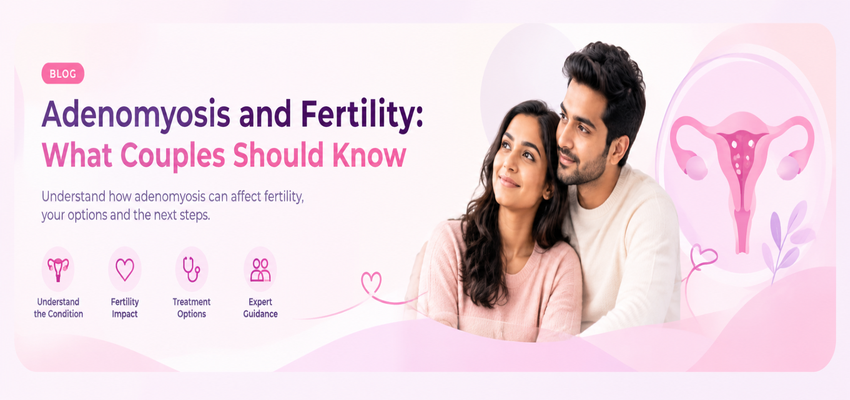
Adenomyosis is a gynaecological condition that can affect a woman's menstrual health and, in some cases, her ability to conceive. It occurs when tissue similar to the lining of the uterus grows into the muscular wall of the uterus. This can cause inflammation, changes in the uterine muscle and symptoms such as painful periods, heavy menstrual bleeding and pelvic discomfort.
For couples planning a pregnancy, an adenomyosis diagnosis can raise several questions: Can you conceive naturally? Does adenomyosis affect IVF success? What treatment options are available? Understanding the condition and seeking timely medical advice can help couples make informed decisions about their fertility journey.
Adenomyosis occurs when endometrial-like tissue is present within the muscular wall of the uterus. The condition may cause the uterus to become enlarged or tender and can lead to inflammation and changes in the uterine environment.
Adenomyosis can occur in women of reproductive age, although it is often diagnosed in women in their 30s and 40s. Some women experience noticeable symptoms, while others may have the condition without obvious signs.
Common symptoms include:
These symptoms can also occur with other gynaecological conditions, such as fibroids or endometriosis. A fertility specialist can help assess the underlying cause.
Adenomyosis does not mean that pregnancy is impossible. Many women with adenomyosis conceive, but the condition may affect fertility in several ways.
Adenomyosis can cause inflammation and changes in the muscular wall of the uterus. These changes may affect the uterine environment and, in some cases, interfere with embryo implantation.
Successful pregnancy requires an embryo to attach to the uterine lining. Adenomyosis may affect the uterine environment and the processes involved in implantation. However, the impact varies depending on the severity and extent of the condition.
Some studies have found an association between adenomyosis and an increased risk of miscarriage. However, the risk varies between individuals, and adenomyosis does not mean that a pregnancy will necessarily end in miscarriage.
Adenomyosis can occur alongside endometriosis, uterine fibroids or other reproductive health conditions. These may also influence fertility, making a comprehensive evaluation important before starting treatment.
Yes, natural conception is possible for many women with adenomyosis. The likelihood depends on several factors, including age, ovarian reserve, the severity of adenomyosis, the condition of the fallopian tubes and sperm health.
Women with mild or asymptomatic adenomyosis may not need fertility treatment immediately. A specialist may recommend trying to conceive naturally for an appropriate period, depending on age and individual circumstances.
For couples who have been trying to conceive without success, an early fertility assessment can help identify potential barriers and guide the next steps.
Adenomyosis may influence IVF outcomes in some women, but the effect is not the same for everyone. Research suggests that certain forms of adenomyosis may be associated with lower implantation rates, reduced pregnancy rates or a higher risk of miscarriage.
The outcome may depend on the extent of the condition, the woman's age, embryo quality and other fertility factors.
A fertility specialist may recommend:
It is important to understand that no single treatment guarantees improved IVF success for every woman with adenomyosis.
Treatment depends on the severity of symptoms, age, fertility goals and whether the woman is planning to conceive soon.
Hormonal treatments may help control heavy bleeding and painful periods. Some medications may also be used to manage adenomyosis before fertility treatment. However, certain hormonal treatments prevent conception while being used, so the timing should be discussed with a fertility specialist.
Depending on the couple's fertility assessment, treatment may include ovulation induction, intrauterine insemination (IUI) or in vitro fertilisation (IVF). IVF may be considered when there are additional fertility factors, when other treatments have not succeeded or when the specialist believes it is the most appropriate option.
Surgery for adenomyosis is not suitable for everyone. Removing adenomyosis from the uterine muscle can be challenging and may carry risks, including uterine scarring or weakening. Surgery should be considered carefully, particularly for women planning a future pregnancy.
Women with mild symptoms may benefit from monitoring and a personalised management plan. Addressing associated conditions, maintaining general health and attending recommended follow-up appointments can also support fertility care.
Consider seeking professional advice if:
Women aged 35 and above are generally advised to seek fertility evaluation after six months of trying to conceive, while women over 40 or those with known reproductive conditions may benefit from earlier assessment.
Adenomyosis can create challenges for some couples trying to conceive, but it does not automatically rule out natural pregnancy or IVF. Early diagnosis, an appropriate fertility assessment and an individualised treatment plan can help couples understand their options and make informed decisions.
If you have adenomyosis and are planning a pregnancy, consulting an experienced fertility specialist can help you determine the next steps based on your reproductive health and fertility goals.





0754000012