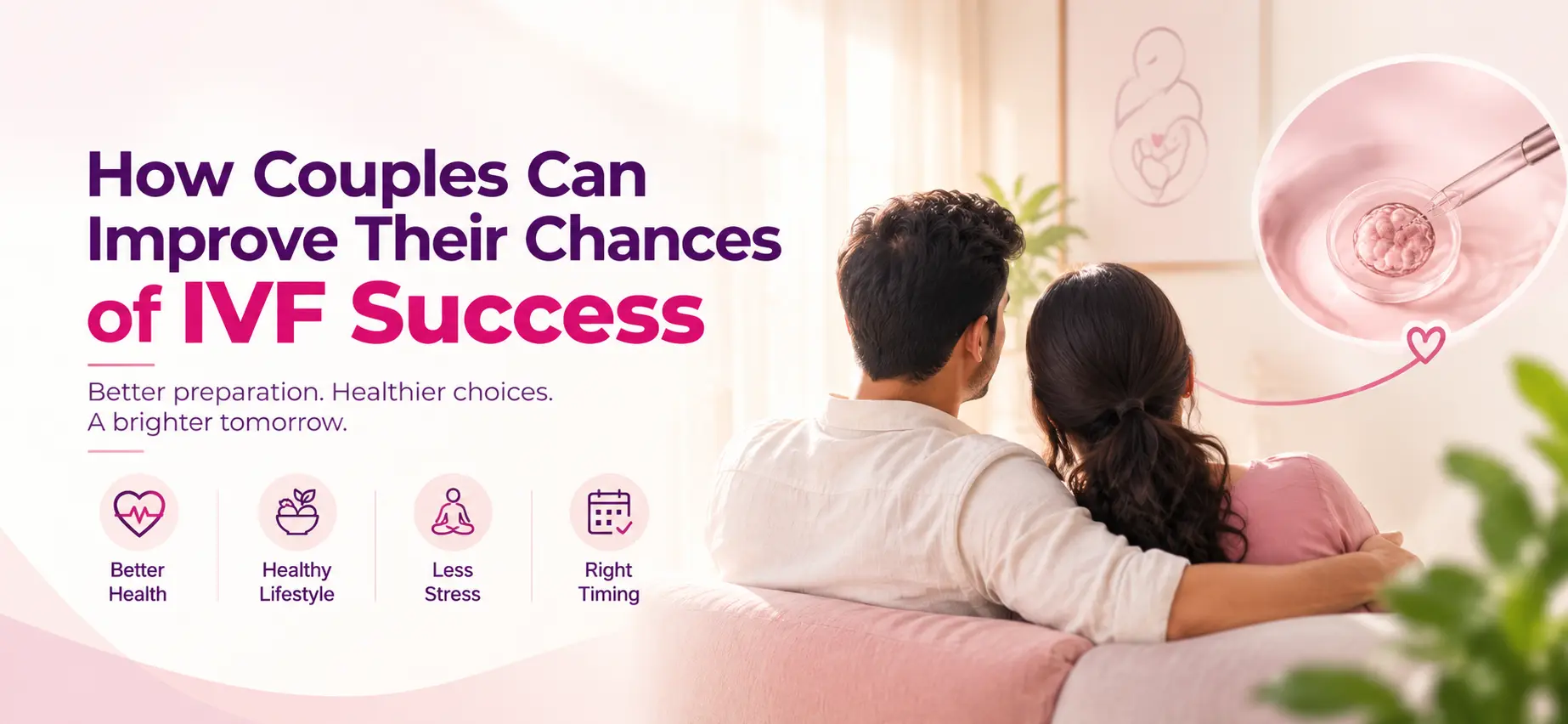
Starting IVF can feel like handing over control to a process full of unknowns. While no clinic can guarantee a specific outcome, and success depends on many individual factors, there is genuinely a lot that couples can do to support their body's best chance before and during treatment. Here's what actually makes a difference.
Before starting a cycle, both partners should undergo a complete fertility workup — hormone levels (including AMH), ovarian reserve testing, uterine health checks (like a hysteroscopy if recommended), and a semen analysis for the male partner. Identifying and treating underlying issues such as thyroid imbalances, PCOS, endometriosis, or sperm quality concerns beforehand can meaningfully improve the odds of a successful cycle.
Both being significantly underweight and overweight can affect hormone balance, egg quality, and implantation. Working toward a healthy BMI in the months before starting IVF — through sustainable diet and exercise changes, not crash dieting — is one of the more controllable factors that can influence outcomes.
A diet rich in antioxidants, leafy greens, healthy fats, and whole foods supports better egg and sperm quality. Folic acid, vitamin D, and CoQ10 are commonly recommended, but supplements should always be taken under your doctor's guidance rather than self-prescribed.
Smoking is one of the most well-documented factors that reduces IVF success rates, for both partners. Alcohol and excessive caffeine intake can also affect fertility outcomes. Cutting these out several months before starting treatment gives the body time to recover.
Stress alone doesn't cause IVF failure, but chronic stress can affect hormone regulation and how well couples cope with the treatment process. Gentle practices like walking, yoga, counselling, or simply talking openly with your partner can help you stay steadier through the cycle.
IVF involves a carefully timed medication schedule. Missing doses, timing injections incorrectly, or adjusting the plan without consulting your doctor can affect egg development and cycle outcomes. If anything is unclear, always check with your clinic rather than guessing.
IVF isn't one-size-fits-all. A protocol tailored to your age, ovarian reserve, and medical history — rather than a standard approach — often makes a meaningful difference. Don't hesitate to ask your specialist why a particular protocol is being recommended for you.
IVF success isn't only about the female partner. Sperm quality, DNA fragmentation, and lifestyle factors like smoking, heat exposure, and stress all affect outcomes. Both partners should be actively involved in pre-treatment preparation.
Poor sleep disrupts the hormones involved in ovulation and implantation. Aiming for consistent, quality sleep in the months leading up to and during treatment supports the body's hormonal rhythm.
IVF can be emotionally demanding, and couples who go in with realistic expectations — understanding that more than one cycle may be needed — often cope better with the process, which indirectly supports staying consistent with treatment.
IVF success depends on a combination of medical factors your doctor manages and lifestyle factors couples can influence themselves. There's no guaranteed formula, but a healthy body, open communication with your care team, and consistent follow-through on your treatment plan all stack the odds in your favour.
If you're preparing for IVF or want to understand what protocol might work best for you, a consultation with a fertility specialist can help you build a personalised plan.






0754000012