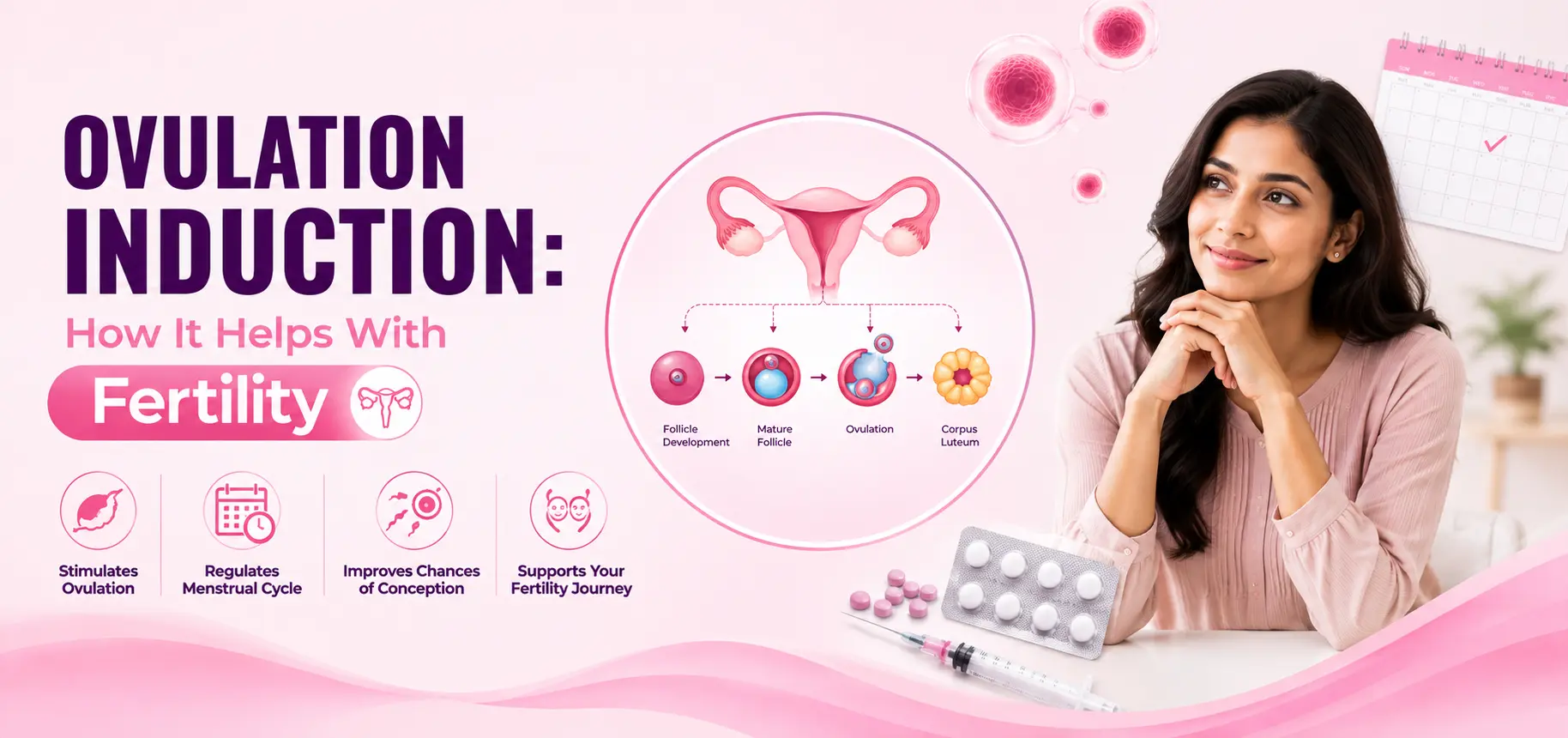
For many couples trying to conceive, difficulties with ovulation can be an important reason why pregnancy does not occur. Ovulation induction is a commonly used fertility treatment that helps stimulate or regulate ovulation, increasing the opportunity for an egg to be released and fertilized.
But what exactly is ovulation induction, who can benefit from it, and when is it recommended? Let's explore.
Ovulation induction is a fertility treatment that uses medications to stimulate the ovaries and encourage the development and release of an egg.
It is primarily recommended for women who do not ovulate regularly or do not ovulate at all. It may also be considered in some couples with unexplained infertility, depending on their individual fertility evaluation.
The goal is simple: to help achieve predictable ovulation and increase the chances of conception.
Ovulation induction may be recommended for women experiencing:
Before starting treatment, a fertility specialist usually evaluates the woman's overall reproductive health and may recommend hormone tests, ultrasound scans, and other fertility investigations.
The treatment process varies depending on the cause of infertility and the medication prescribed.
Generally, the process involves:
The fertility specialist first assesses factors that may be affecting conception. This can include menstrual history, hormone testing, ultrasound, ovarian reserve assessment, and evaluation of the partner's sperm when appropriate.
The doctor may prescribe oral fertility medicines or injectable medications to encourage the ovaries to develop one or more follicles.
The choice of medication depends on the woman's individual condition and treatment plan.
Ultrasound scans may be performed during the treatment cycle to monitor how the ovaries are responding to medication.
Monitoring helps the fertility specialist determine whether follicles are developing appropriately and reduce the risk of complications such as excessive ovarian stimulation or multiple pregnancy.
When a mature follicle develops, the specialist may advise timed intercourse around ovulation. In some cases, ovulation induction may be combined with intrauterine insemination (IUI).
Depending on the treatment plan, medication may also be used to trigger ovulation at an appropriate time.
PCOS is one of the common conditions associated with irregular or absent ovulation.
Women with PCOS may have difficulty releasing an egg regularly, which can make conception more challenging. Ovulation induction can help stimulate ovulation in appropriate patients.
However, treatment should be individualized. The fertility specialist will consider factors such as age, ovarian reserve, menstrual pattern, weight, previous treatment, and other fertility factors before recommending a specific approach.
For appropriately selected patients, ovulation induction can:
However, success depends on several factors, including age, the cause of infertility, ovarian reserve, sperm quality, and the health of the fallopian tubes.
Like other fertility treatments, ovulation induction should be performed under medical supervision.
Possible risks can include:
Regular monitoring can help the fertility team adjust treatment and manage potential risks.
The exact duration depends on the medication and the individual's response to treatment. In many cases, treatment is planned around the menstrual cycle, with monitoring performed at specific points during the cycle.
Your fertility specialist can explain the expected timeline based on your treatment plan.
If you have been trying to conceive without success, particularly if you have irregular periods, PCOS, absent periods, or a known fertility condition, speaking with a fertility specialist can help identify the underlying cause.
Rather than starting fertility medication without evaluation, it is important to understand why ovulation may be irregular and whether other fertility factors could also be affecting conception.
Ovulation induction can be an effective treatment for selected women with ovulation-related fertility difficulties. However, fertility treatment is not one-size-fits-all. A proper evaluation helps determine whether ovulation induction, IUI, IVF, or another treatment would be more appropriate.






0754000012