Iron rarely makes it into everyday conversations about fertility — most people think of folate or prenatal vitamins first. But iron plays a direct role in ovulation, egg quality, and preparing your body for conception. If you're trying to conceive, understanding how iron fits into your fertility journey — and getting the right expert guidance on it — can make a meaningful difference.
Why Iron Matters for Fertility
Iron is essential for producing healthy red blood cells, which carry oxygen to every part of your body — including your reproductive organs. When iron levels are low, the body may struggle to support healthy ovulation and a receptive uterine lining.
- Supports ovulatory function: Research has linked low iron intake to a higher risk of ovulatory infertility.
- Prepares the uterine lining: Adequate iron helps build a healthy endometrium, which is essential for implantation.
- Replenishes what's lost monthly: Menstrual blood loss means women trying to conceive often need more iron than the general population.
- Supports energy and hormone balance: Iron deficiency can cause fatigue and disrupt hormonal regulation, both of which affect fertility.
Why Expert-Guided Nutrition Matters (Not Just Any Diet Advice)
Generic diet tips are everywhere — but fertility nutrition isn't one-size-fits-all. At a dedicated fertility research centre, iron and nutritional status are typically assessed as part of a broader fertility work-up, not looked at in isolation. This matters because:
- Iron levels are tested, not guessed. A simple blood test (ferritin, haemoglobin) shows whether you're actually deficient, borderline, or sufficient — supplementing blindly isn't the same as targeted correction.
- Iron interacts with other fertility factors. Thyroid function, PCOS, and unexplained infertility can all influence or be influenced by iron status — something a specialist can evaluate together rather than in isolation.
- Timing matters around treatment. For couples undergoing IUI, IVF, or ICSI, nutritional optimisation — including iron — is often most effective when planned ahead of the treatment cycle, under medical guidance.
- Overcorrection has risks too. Excess iron supplementation without testing can cause its own complications, which is why professional guidance is safer than self-prescribing supplements.
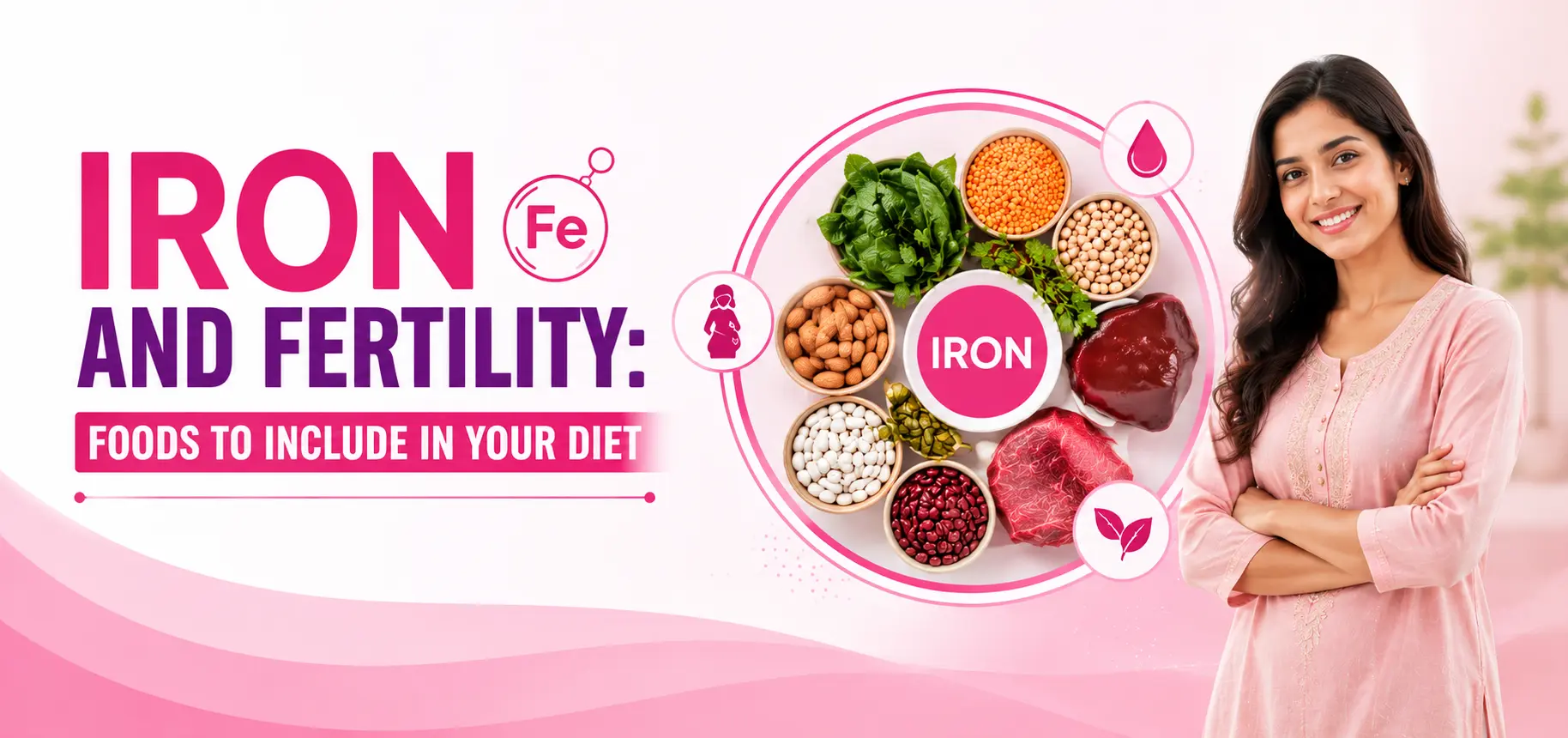
Best Iron-Rich Foods to Include in Your Diet
Animal-Based Sources (Heme Iron — easily absorbed)
- Lean red meat
- Chicken and turkey
- Fish, especially sardines and tuna
- Eggs
Plant-Based Sources (Non-Heme Iron)
- Lentils, chickpeas, and beans
- Spinach and other leafy greens
- Tofu and tempeh
- Pumpkin seeds and cashews
- Quinoa
- Dried apricots and raisins
Boosting Iron Absorption
- Pair plant-based iron sources with vitamin C-rich foods (citrus fruits, tomatoes, bell peppers) to significantly improve absorption
- Avoid drinking tea or coffee immediately with iron-rich meals, as they can reduce absorption
- Cooking in cast-iron cookware can also modestly increase the iron content of food
Signs You Might Be Low in Iron
- Persistent fatigue or low energy
- Irregular periods or ovulation issues
- Pale skin, dizziness, or shortness of breath
- Difficulty concentrating
If these sound familiar, it's worth getting your iron levels checked as part of a broader fertility evaluation, rather than assuming supplementation alone is the fix.