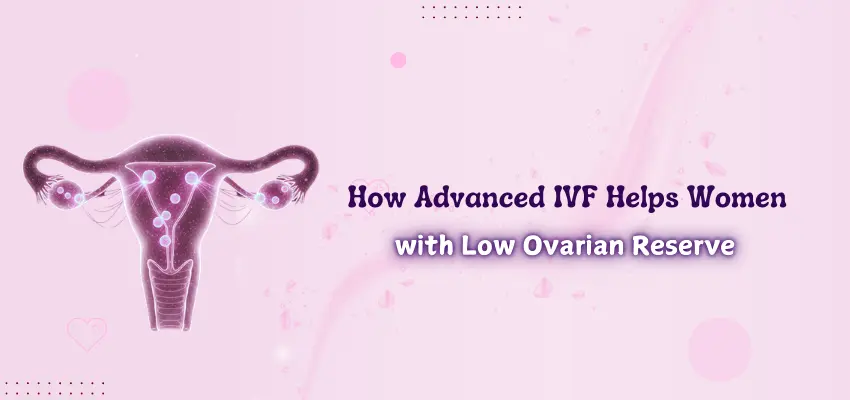
Low Ovarian Reserve (LOR) is a condition where the ovaries have fewer eggs left than expected for a woman’s age. It can make natural conception difficult and may reduce the response to fertility medications. However, with advanced IVF technology, many women with low ovarian reserve are still able to achieve successful pregnancies through carefully tailored treatment approaches.
Women are born with a fixed number of eggs, and this number declines with age. In some cases, the decline happens earlier or faster due to genetics, medical conditions, surgery, or lifestyle factors. Doctors usually diagnose LOR through tests such as:
These tests help fertility specialists understand how the ovaries may respond during an IVF cycle.
This is where advanced IVF protocols and lab technologies play a crucial role.
Instead of using standard medication plans, fertility specialists design individualized stimulation protocols (mild stimulation, antagonist protocols, or dual stimulation) to maximize egg retrieval from limited reserves.
This modern approach allows egg retrieval twice in the same menstrual cycle, increasing the total number of eggs collected in a short time for women with very low reserve.
High-quality IVF labs with controlled environments improve fertilization and embryo development even when only a few eggs are available.
Intracytoplasmic Sperm Injection (ICSI) ensures that each mature egg is directly fertilized, improving chances when egg numbers are limited.
Growing embryos to the blastocyst stage helps embryologists select the strongest embryo for transfer, improving implantation chances.
With vitrification (advanced freezing), embryos from multiple cycles can be stored and later transferred together, increasing success rates.
PGT helps identify chromosomally healthy embryos, which is especially important when egg quality may be affected by age or reserve.
Women with low ovarian reserve often require emotional reassurance along with medical expertise. Regular monitoring, transparent communication, and realistic expectations from the fertility team make the journey less stressful and more hopeful.
Having low ovarian reserve does not mean pregnancy is impossible. With advanced IVF methods, personalized care, and modern embryology techniques, many women with LOR have successfully conceived.
Advanced IVF technology offers new hope for women diagnosed with low ovarian reserve. Through customized treatment plans, advanced lab techniques, and embryo selection methods, fertility specialists can significantly improve the chances of pregnancy. If diagnosed early and treated at a well-equipped fertility centre, women with LOR can still achieve their dream of parenthood with confidence.






0754000012