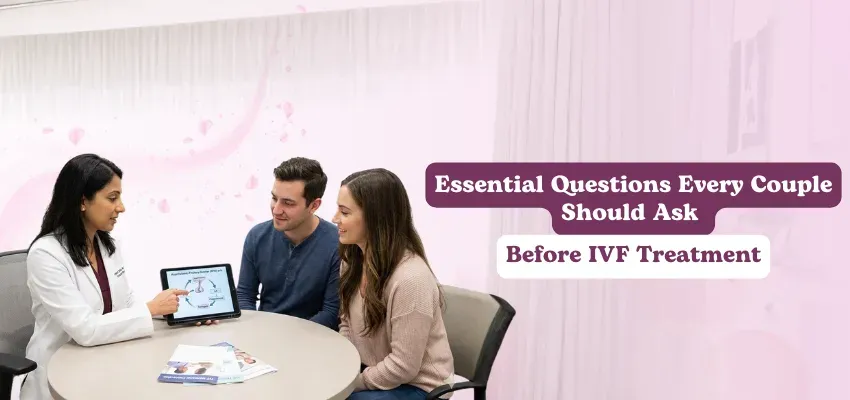
Starting In Vitro Fertilization (IVF) is a significant step for couples who are trying to conceive. While IVF has helped millions of families around the world achieve their dream of parenthood, the treatment process can feel complex and overwhelming at first. Understanding the procedure, possible outcomes, and the overall journey is important before beginning treatment. Asking the right questions during your consultation with a fertility specialist can help you feel more informed, confident, and prepared for the road ahead.
Before recommending IVF, doctors usually perform several diagnostic tests to understand the underlying cause of infertility. These tests may include hormone level checks, ovarian reserve testing, ultrasound scans, semen analysis, and sometimes genetic testing. These evaluations help determine the health of the eggs, sperm quality, and the condition of the uterus. Asking about these tests helps couples understand their fertility status and ensures that the treatment plan is customized based on their specific needs.
The chances of success can vary based on several factors such as the woman’s age, egg quality, sperm health, medical history, and the cause of infertility. A fertility specialist can explain the expected success rate in your particular case and whether multiple IVF cycles might be required. Understanding these probabilities can help couples set realistic expectations and emotionally prepare for the journey.
IVF treatment usually takes place in several stages. The first stage involves ovarian stimulation, where medications are used to induce the ovaries to produce multiple eggs. This is followed by egg retrieval, a minor procedure where mature eggs are collected from the ovaries. The eggs are then fertilized with sperm in a laboratory, and the resulting embryos are carefully monitored. After a few days, one or more healthy embryos are transferred into the uterus in hopes of achieving pregnancy. Asking your doctor to explain each stage, the timeline, and the medications involved can help you better understand the process.
Although IVF is generally considered safe, it is still important to understand potential risks or side effects. Some women may experience mild side effects from fertility medications, such as bloating, mood changes, or discomfort. In rare cases, ovarian hyperstimulation syndrome (OHSS) may occur due to the stimulation medications. There is also a possibility of multiple pregnancies if more than one embryo is transferred. Discussing these risks with your doctor allows you to understand how they are monitored and managed during treatment.
Many fertility specialists recommend maintaining a healthy diet, exercising regularly, managing stress levels, and avoiding smoking or alcohol during treatment. Maintaining a healthy body weight and following your doctor’s guidance regarding medications and supplements can also improve the chances of a successful IVF cycle. Couples should ask their doctor about specific lifestyle changes that may benefit their fertility health.
IVF treatment can involve several components, including consultation fees, diagnostic tests, medications, laboratory procedures, and embryo transfer. The overall cost can vary depending on the clinic, treatment plan, and additional procedures that may be required. Asking for a detailed cost breakdown helps couples understand the financial commitment involved and plan accordingly.
Not every IVF cycle results in pregnancy, and sometimes multiple cycles may be needed to achieve success. It is important to discuss what the next steps would be if the first cycle does not work. Your doctor may suggest adjusting the treatment protocol, using frozen embryos from the previous cycle, or exploring additional fertility options.
IVF treatment requires careful planning, emotional strength, and clear communication with your fertility specialist. By asking important questions before beginning treatment, couples can gain a better understanding of the process, potential challenges, and expected outcomes. Being well-informed allows couples to approach IVF with confidence, make thoughtful decisions, and stay positive as they move closer to achieving their dream of starting a family.






0754000012