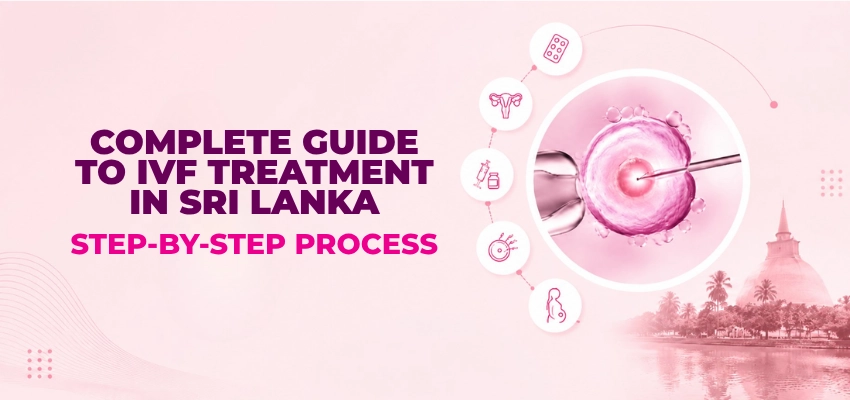
Infertility affects millions of couples worldwide, and many in Sri Lanka are turning to In Vitro Fertilization (IVF) as a safe and effective solution to achieve their dream of parenthood. Advances in reproductive medicine, experienced fertility specialists, and modern embryology laboratories have made IVF one of the most successful fertility treatments available today.
If you're considering IVF treatment in Sri Lanka, understanding each stage of the process can help you feel more confident and prepared. This comprehensive guide explains every step involved, from your first consultation to pregnancy confirmation.
In Vitro Fertilization (IVF) is an assisted reproductive technology (ART) where eggs are collected from the woman's ovaries and fertilized with sperm in a specialized laboratory. The resulting embryo is then transferred into the uterus, where it may implant and develop into a healthy pregnancy.
IVF is commonly recommended for couples facing fertility challenges such as:
Your IVF journey begins with a consultation with a fertility specialist. During this appointment, the doctor will review your medical history, lifestyle, previous pregnancies, and any prior fertility treatments.
Both partners may undergo fertility evaluations, including:
Based on these results, your fertility specialist will determine whether IVF is the most suitable treatment option.
Every couple's fertility journey is unique. After reviewing your test results, the fertility specialist creates a customized treatment plan tailored to your age, ovarian reserve, medical history, and fertility diagnosis.
Your treatment plan may include:
A personalized approach helps maximize the chances of a successful pregnancy.
The next stage involves stimulating the ovaries to produce multiple mature eggs instead of the single egg released during a natural menstrual cycle.
Hormonal fertility injections are typically administered for 8 to 12 days.
During this period, you'll have regular monitoring through:
These appointments help your doctor track follicle growth and adjust medication doses if required.
Once the follicles reach the ideal size, a "trigger injection" is given to prepare the eggs for collection.
Egg retrieval is a minimally invasive procedure performed approximately 34 to 36 hours after the trigger injection.
The procedure involves:
Most patients experience minimal discomfort and can return home the same day after a short recovery period.
On the day of egg retrieval, a semen sample is collected from the male partner or previously frozen sperm is prepared.
The embryology laboratory carefully selects the healthiest sperm for fertilization.
Depending on the fertility diagnosis, one of two techniques is used:
Healthy sperm are combined with the eggs in a laboratory dish, allowing fertilization to occur
Over the next three to five days, embryologists carefully observe the embryos in advanced laboratory incubators.
Each embryo is evaluated based on:
Only the healthiest embryos are selected for transfer, increasing the likelihood of successful implantation.
If additional high-quality embryos are available, they may be frozen for future IVF cycles.
Embryo transfer is one of the most exciting milestones in the IVF journey.
The selected embryo is gently placed into the uterus using a thin, flexible catheter. The procedure is quick, painless, and usually does not require anesthesia.
Most patients can resume light daily activities shortly after the transfer, although strenuous exercise should be avoided.
Following embryo transfer comes the "two-week wait," during which the embryo may implant into the uterine lining.
During this period, your fertility specialist may prescribe medications such as progesterone to support implantation and early pregnancy.
Helpful recommendations include:
While many women pay close attention to physical symptoms, it's important to remember that symptoms—or the absence of them—do not reliably indicate whether the treatment has been successful.
Approximately 10 to 14 days after embryo transfer, a blood test (Beta hCG) is performed to determine whether implantation has occurred.
If the result is positive:
If the cycle is unsuccessful, your doctor will review the treatment, discuss possible reasons, and recommend the best next steps, including the use of frozen embryos if available.
Sri Lanka has become an increasingly trusted destination for fertility care due to its combination of advanced medical expertise and patient-focused services.
Benefits include:
Many fertility centres also provide comprehensive support throughout the treatment journey, ensuring patients feel informed, comfortable, and confident at every stage.
Starting IVF can feel overwhelming, but understanding each step helps reduce uncertainty and empowers you to make informed decisions. With expert fertility specialists, advanced reproductive technologies, and compassionate care, IVF treatment in Sri Lanka offers hope to couples striving to build their families.
If you've been trying to conceive without success, don't delay seeking professional guidance. Early evaluation and personalized fertility treatment can make a meaningful difference in your journey toward parenthood.
Take the first step today by scheduling a consultation with an experienced fertility specialist and begin your path toward achieving your dream of becoming parents.






0754000012