If your doctor has mentioned "low AMH" during a fertility check-up, it's natural to feel a wave of worry. But before you panic, it helps to understand exactly what this number means — and, just as importantly, what it doesn't.
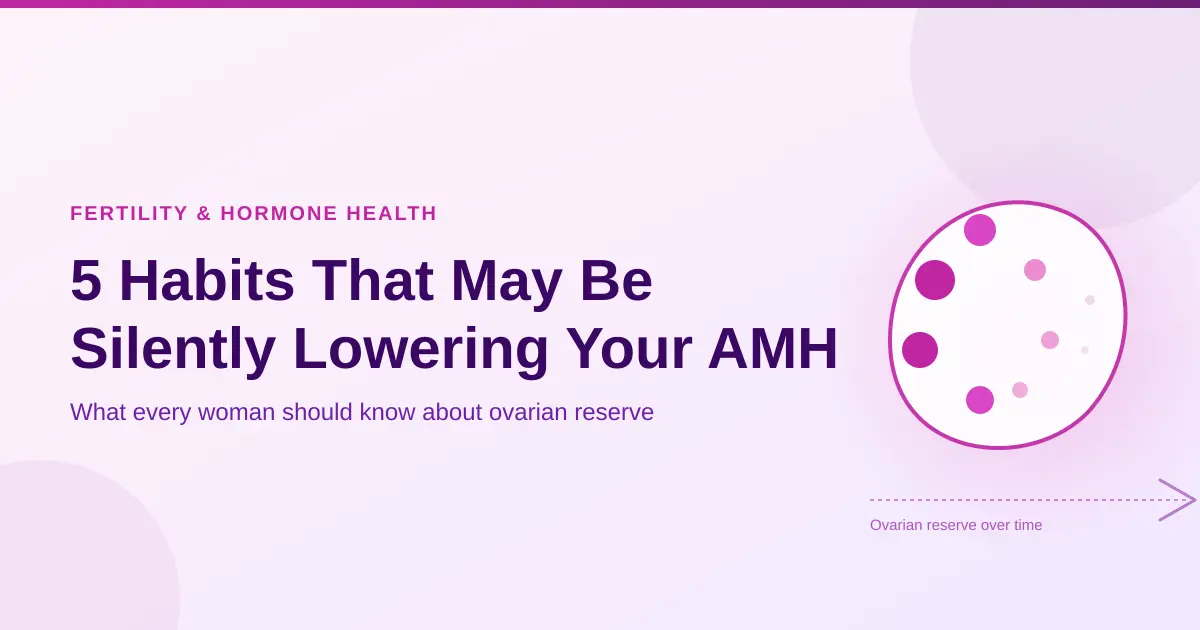
AMH stands for Anti-Müllerian Hormone, a hormone produced by the small follicles in your ovaries. Each of these follicles contains an immature egg, and the amount of AMH in your blood roughly reflects the size of your remaining egg supply — what doctors call your ovarian reserve.
A simple blood test, taken on any day of your cycle, can measure your AMH level. Because it doesn't fluctuate much with your monthly cycle (unlike hormones like FSH or estrogen), it's become one of the most commonly used markers to estimate fertility potential.
Low AMH indicates that you have a lower number of eggs remaining compared to what's typical for your age. It's important to separate two things AMH does not tell you:
Many women with low AMH go on to conceive naturally, especially if they're otherwise ovulating regularly and have no other underlying fertility issues. AMH is simply one piece of a much larger fertility picture — not the whole story.
Several factors can contribute to a lower-than-expected AMH level:
If you've been diagnosed with low AMH at a younger age, it's worth discussing these underlying causes with your fertility specialist, since the reason behind the low number can shape the right treatment path.
Not necessarily. Treatment depends on your overall fertility profile, not AMH alone. Options your doctor may discuss include:
The key is not to wait too long before seeking guidance — with a lower egg reserve, time can matter more, and earlier intervention often means more options.
There's no proven way to significantly increase your AMH level or egg count — once follicles are used or lost, they don't regenerate. However, certain lifestyle steps can support overall reproductive health and may help optimize egg quality:
These steps won't reverse a low AMH reading, but they support the healthiest possible environment for the eggs you do have.
A low AMH result can feel discouraging, but it's a starting point for a conversation — not a final verdict on your ability to have a child. Many women with low AMH have gone on to have successful pregnancies, whether naturally or with the right fertility support.
If you've received a low AMH result, the most valuable next step is a consultation with a fertility specialist who can look at your complete picture — age, AFC, hormone levels, and personal history — and help you understand your real options, timelines, and next steps.
Don't wait to get clarity on your fertility journey. Book a consultation with our fertility specialists today and take the first step toward understanding your options.






0754000012